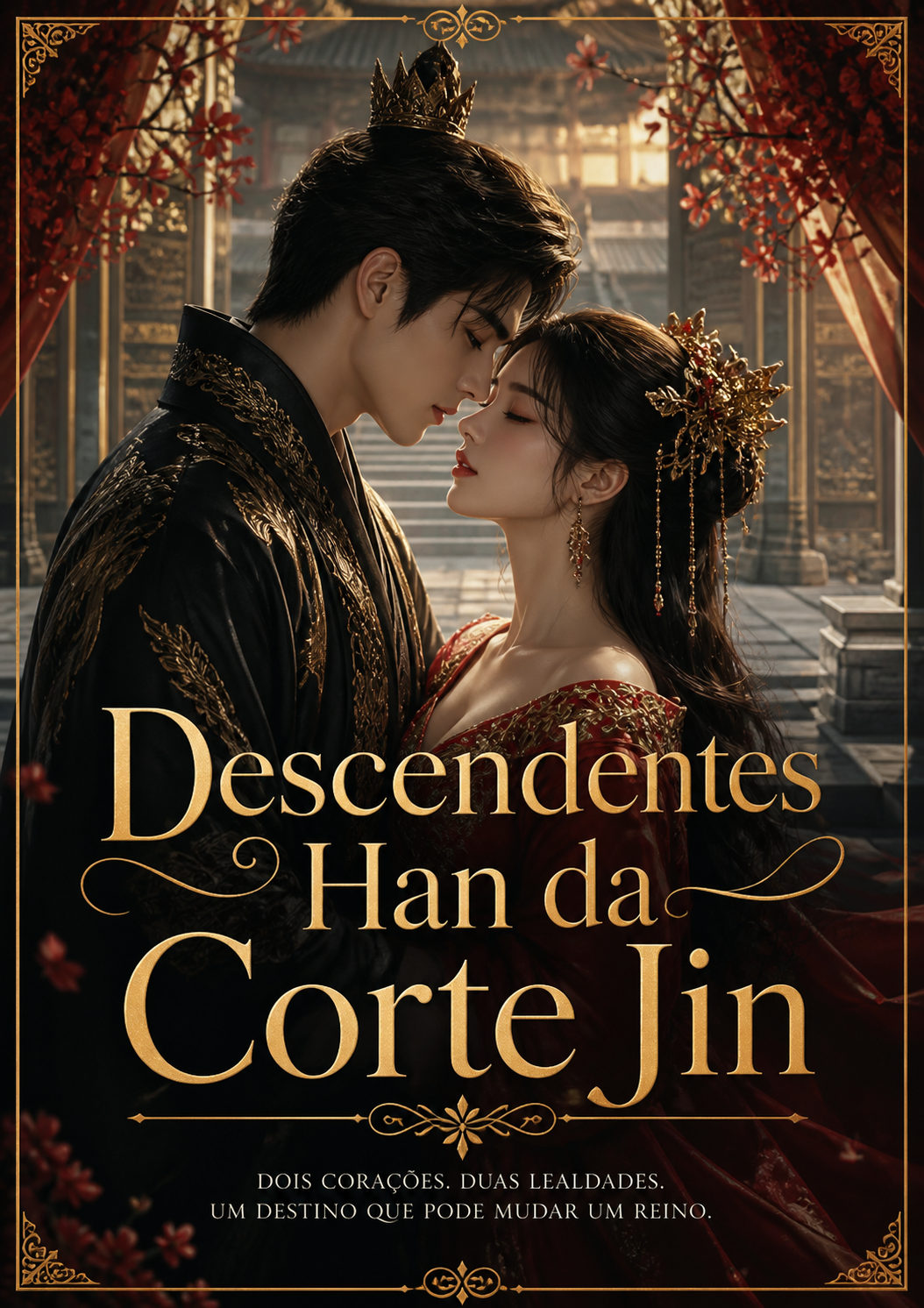
Descendentes Han da Corte Jin
O que se recorda repetidamente são as montanhas; o que nunca se esquece é o mar. No dia em que Jiang Wei morreu na grande queimada de Chengdu, o último brilho do Império Han extinguiu-se por completo. Os homens de Jin ficaram ao lado de seu cadáver e encontraram nele uma enorme vesícula biliar, olhando-se uns aos outros, perplexos. O Império Jin Ocidental foi fundado graças a essa vitória, mas o futuro que se avizinhava era doloroso: quarenta anos depois, havia lamentos por toda parte, as terras das Nove Províncias estavam devastadas, os ossos dos mortos se acumulavam, e multidões de famintos vagavam como nuvens. No meio desse caos apocalíptico, por dever e destino, Liu Xian, bisneto de Liu Bei, herdeiro legítimo nascido e criado como príncipe de Anle, embarcou numa jornada para restaurar o império. Ele seguiu os passos de seus mestres e ancestrais Han, reencontrando-se com os descendentes dos antigos rivais e aliados — como Cao Cao, Sun Quan, Lu Xun, Lu Zhi, Xun Yu... — e, então, forjou-se, transformou-se e superou-se nas lutas políticas e nas guerras. No início, estava sozinho; porém, ao olhar para trás, tornou-se o líder de quem todos esperavam grandes feitos.
Descendentes Han da Corte Jin
Traditionally, an author should strive to remain as invisible as possible outside the main text of their work. Yet, in the realm of online literature, the distance between writer and reader has become remarkably close. Readers can sense the author’s daily anxieties, while the author can perceive the readers’ daily joys and sorrows. In such a landscape, maintaining the aloof reserve expected of writers is nearly impossible. Thus, at the very beginning, I wish to speak more openly with those who choose to read this book.
I am an admittedly imperfect online novelist, fully aware of this fact because I cannot write the kind of stories typically expected in this genre. Traditional online fiction aims to entertain: to immerse readers fully, making them laugh heartily, feel exhilarated, and leave behind all worries—a simple, pure joy. But I cannot produce such works. It is not out of disdain or inability, but simply because I am not the kind of person who finds that kind of writing satisfying.
No matter how much one wishes to serve the readers, writing ultimately remains an act of the author’s own creation. I can only write what I am capable of, what I desire to see in literature—and my aesthetic sensibility happens to be somewhat unusual.
In my previous work, "Ji Han Zhangwu," I endeavored to craft a purely virtuous sage character. Over two years, I wrote two million words and felt content with the result, though its reception was modest at best. I harbor no regrets, for creating such a character was a conviction born from years of reading. Even if
📚 Related Recommendations
View More >